

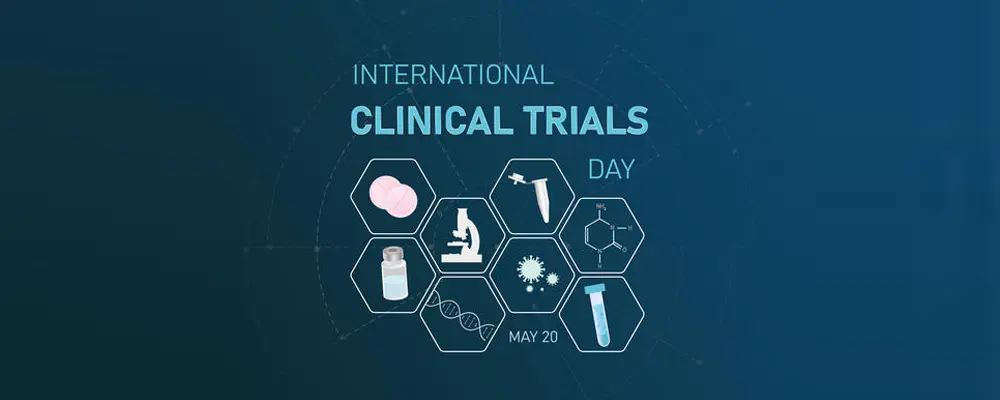
Clinical trials day 2026 is the one day a year we actually stop to acknowledge that. May 20. Mark it.
What is Clinical Trials Day 2026?
In 1747, a Scottish naval surgeon named James Lind was dealing with a scurvy outbreak on the HMS Salisbury. Twelve sick sailors, six different treatments, one simple comparison. The pair who got oranges and lemons recovered. Nobody else did.
That experiment, straightforward as it sounds, is widely considered the birth of the controlled clinical trial. The Society of Clinical Research Associates (SoCRA) later chose May 20 to honor it, and the observance grew from there into a global event. Today, hospitals, research institutes, universities, and patient groups across dozens of countries mark international clinical trial day every year.
It is not a celebration for scientists. It is a public reminder that the research process exists, that it works, and that it needs people to keep working.
Why Does Clinical Trial Awareness Matter?
Most people do not know what a clinical trial actually is. That is not an exaggeration. Ask around and you will hear that trials are only for terminally ill patients, that participants are treated like lab rats, or that the whole thing is too risky to consider. None of that is accurate, but the myths stick because the facts do not travel as well.
That gap has real consequences. Fewer than 5% of adult cancer patients in the United States enroll in clinical trials each year. Roughly 80% of trials run behind schedule, mostly because of slow enrollment. Treatments that could be helping people right now are sitting in development because not enough volunteers came forward.
Clinical trial awareness day exists to fix that, not by pressuring anyone, but by making honest information available to the people who need it. When someone understands what a trial actually involves, the safety reviews, the ethics oversight, the right to leave at any time, the conversation changes completely.
What Has Clinical Research Actually Produced?
The short answer: nearly everything in modern medicine.
Statins for heart disease. Antiretroviral drugs that turned HIV from a fatal diagnosis into a manageable condition. The polio vaccine. The COVID-19 vaccines approved in under a year. All of it went through controlled clinical studies first.
Clinical research has also corrected medicine when it was wrong. Bloodletting was standard practice for centuries. Routine tonsillectomies were performed on almost every child well into the 20th century. Trials are what moved medicine from tradition to evidence.
The milestones are worth knowing.
- In 1948, the UK Medical Research Council used the first properly randomized controlled trial to prove streptomycin worked against tuberculosis.
- The Salk polio vaccine trial in 1954 was the largest public health study ever conducted at that point, and the vaccine was approved the following year.
- AZT trials in the 1980s changed the entire trajectory of HIV treatment.
- Tamoxifen trials in 1994 proved for the first time that a drug could prevent breast cancer, not just treat it.
- Between 2020 and 2021, mRNA COVID-19 vaccine trials enrolled tens of thousands of participants and delivered results that reshaped what we thought was possible.
That is roughly 270 years of progress. All of it dependent on people agreeing to participate.
Who Can Participate in a Clinical Trial?
Not just seriously ill patients. That is the biggest misconception in this space.
Trials study a wide range of things: new medications, existing treatments applied in new ways, mental health interventions, preventive care, diagnostics, lifestyle studies. Many trials actively recruit healthy volunteers. Others look for people with common conditions like high blood pressure, high cholesterol, or asthma.
Every trial has eligibility criteria, a defined set of rules about who can join based on age, health history, and current medications. These are not bureaucratic hurdles. They protect participants and make the data meaningful. If you want to know whether you qualify for anything, start with your doctor or browse ClinicalTrials.gov and the WHO International Clinical Trials Registry Platform.
On the safety question: before any trial begins, an Independent Ethics Committee or Institutional Review Board (IRB) reviews the entire study design. Their job is participant safety, full stop. You are monitored throughout, and you can withdraw at any time without it affecting your regular care.
How Is Clinical Trials Day 2026 Being Observed?
This year, international clinical trial day is being marked across six continents. Research hospitals are hosting public events. Patient advocacy groups are running town halls. Academic centers are putting on free seminars. Social media campaigns are pulling researchers and former participants into the same conversation as people who are simply curious.
The most useful content that comes out of this day often comes from former participants, people who joined a study, went through the process, and want others to know what it was actually like. That kind of direct, firsthand account does more to build trust than any official communications ever could.
Organizations like the Association of Clinical Research Professionals (ACRP), SoCRA, and TransCelerate Biopharma coordinate a lot of how this day gets organized globally.
At Pantheon Clinical Research, clinical trials day 2026 is a moment to be straightforward with our communities: about what we do, why we do it, and what real participation looks like.
Frequently Asked Questions
When is Clinical Trials Day 2026?
May 20, 2026. The date marks the anniversary of James Lind’s 1747 scurvy experiment, considered the first controlled clinical trial in recorded history.
Why does clinical trial awareness day matter?
Because most people benefit from clinical research without knowing it, and low public awareness directly slows down new treatments reaching patients. This day is about closing that gap.
Is it safe to participate in a clinical trial?
Yes. Every trial is reviewed by an independent ethics board before it starts. Participants are monitored throughout the study and can leave at any point without consequence to their regular medical care.
How do I find a trial to join?
ClinicalTrials.gov covers studies in the United States. The WHO International Clinical Trials Registry covers global options. Your doctor can also direct you, and many disease-specific organizations maintain lists of currently enrolling studies.
Why May 20 Is Worth Your Attention?
Clinical trials day 2026 is not just a calendar event for researchers. It is a reminder that medical progress depends on public participation, and public participation depends on public understanding.
You have already benefited from clinical research. The treatments that work today, the ones that replaced the ones that did not, the vaccines that made certain diseases almost unthinkable, all of it passed through a trial at some point. People you will never know made that possible by saying yes.
This May 20, the ask is simple. Learn something. Share something. If you have ever been curious about what trials are running near you or what participation actually involves, now is the time to find out.
Pantheon Clinical Research is here for that conversation. What studies are open, what the process looks like, what questions you should be asking before you consider anything: our team will give you straight answers. Come find us.
